Skip to content

Architecture

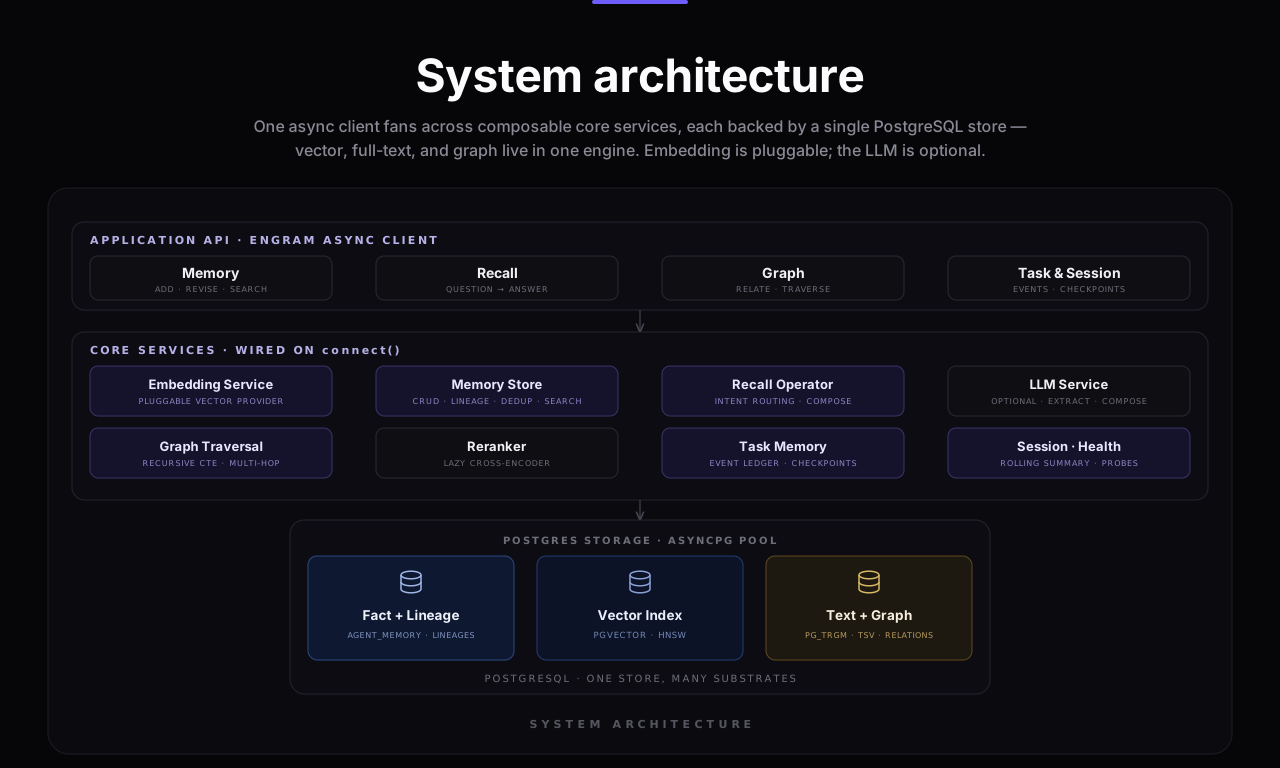
Engram is an async Python memory layer backed by PostgreSQL + pgvector. The current beta architecture is built for persistent fact memory, source-aware long-input handling, graph expansion, and resumable long-running task state.
System View

---
config:
  theme: base
  look: handDrawn
  themeVariables:
    primaryColor: '#e1f5fe'
    secondaryColor: '#fffde7'
    tertiaryColor: '#f3e5f5'
    fourthColor: '#e8f5e9'
---
flowchart TD
    %% Input
    App{{<b>Application / Agent</b>}}

    %% Engram Client Subgraph
    subgraph CLIENT ["馃數 Engram Client"]
        direction TB
        MemAPI([<b>Memory API</b><br/>add, search, trace])
        CtxAPI([<b>Context API</b><br/>block builder])
        Pol([<b>Policy</b><br/>metadata & conflict])
        TaskAPI([<b>Task API</b><br/>events, jobs])
        LongAPI([<b>Long Input API</b><br/>chunking])
        GraphAPI([<b>Graph API</b><br/>relations])
    end

    %% Services Subgraph
    subgraph SERVICES ["馃煝 Backend Services"]
        direction TB
        MemStore(MemoryStore)
        TaskMgr(TaskMemoryManager)
        CtxBld(ContextBuilder)
        GraphTrav(GraphTraversal)
        EmbSvc(EmbeddingService)
        LLMSvc(LLMService)
    end

    %% Database Subgraph
    subgraph DB_LAYER ["馃煛 Data Layer"]
        direction TB
        DB[(<b>PostgreSQL</b><br/>pgvector + pg_trgm)]
    end

    %% Flow
    App ==> CLIENT
    CLIENT ==> SERVICES
    SERVICES ==> DB_LAYER

    %% Styling
    style CLIENT fill:#e1f5fe,stroke:#01579b,stroke-width:2px,rx:10,ry:10
    style SERVICES fill:#e8f5e9,stroke:#2e7d32,stroke-width:2px,rx:10,ry:10
    style DB_LAYER fill:#fffde7,stroke:#fbc02d,stroke-width:2px,rx:10,ry:10

    classDef process fill:#fff,stroke:#333,stroke-width:1px,rx:8,ry:8;
    classDef api fill:#fff,stroke:#333,stroke-width:2px,rx:20,ry:20;
    classDef source fill:#fff,stroke:#01579b,stroke-width:2px;
    classDef dbnode fill:#fff,stroke:#fbc02d,stroke-width:2px;

    class MemStore,TaskMgr,CtxBld,GraphTrav,EmbSvc,LLMSvc process;
    class MemAPI,CtxAPI,Pol,TaskAPI,LongAPI,GraphAPI api;
    class App source;
    class DB dbnode;

Design Choices

Decision Reason
PostgreSQL as the required store ACID writes, vector search, full-text search, JSONB, recursive CTEs
Two-column memories embed compact facts and preserve source context without extra embedding cost
Policy metadata critical facts and conflicts need deterministic retrieval rules
Append-oriented event ledger long-running agents need auditability and replayable context
Checkpoints resuming a task should not require replaying every raw event
Durable memory jobs fact derivation can be decoupled from the user-facing turn
Recall traces missed retrievals must be diagnosable
Evidence APIs aggregation questions need diverse coverage, not only top-k relevance

Component Responsibilities

Engram

src/engram/client.py is the public facade. It owns lifecycle and exposes:

  • memory CRUD
  • search, deep search, critical recall, and trace recall
  • evidence-set retrieval and neighboring context
  • task, event, checkpoint, and memory-job APIs
  • long-input ingestion and context
  • graph relation and traversal APIs
  • session and health APIs

MemoryPolicy

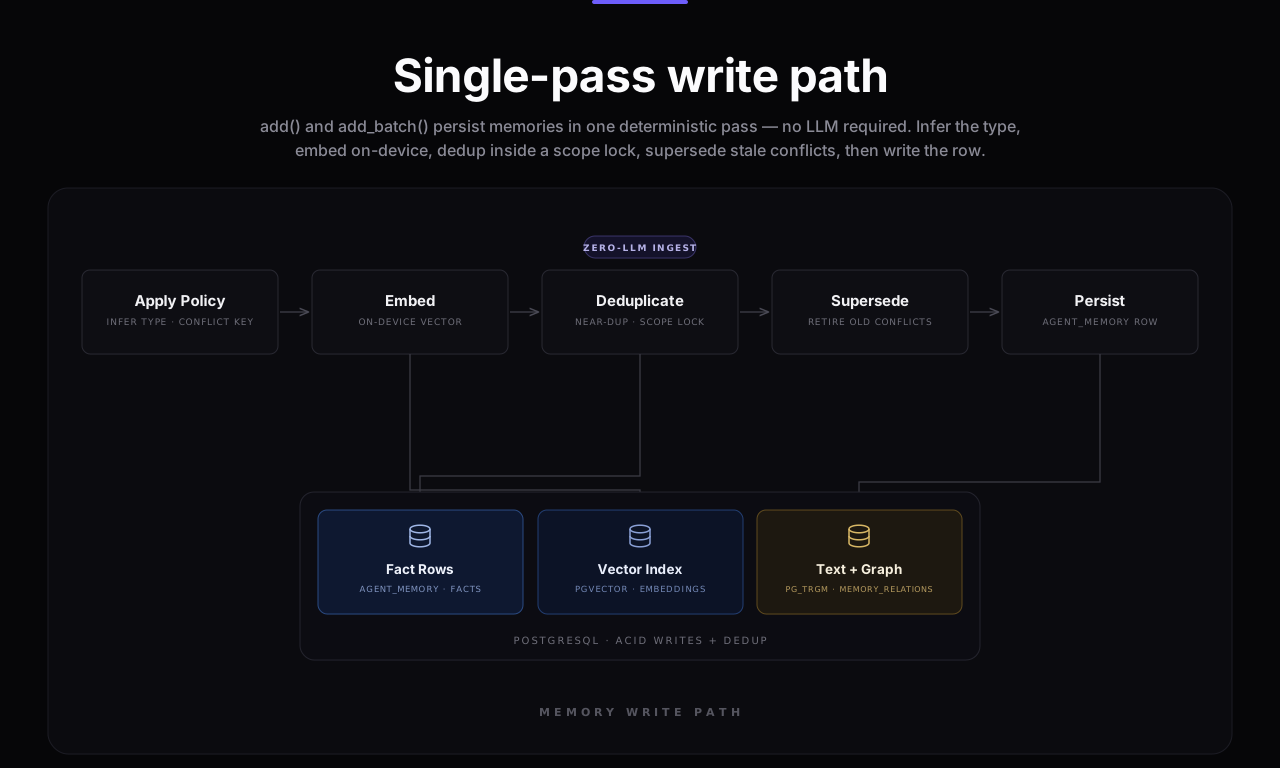
src/engram/policy.py controls type inference, critical memory selection, critical slots, and conflict keys. Policies enrich metadata before MemoryStore writes a memory.

MemoryStore

src/engram/memory/store.py handles embeddings, inserts, updates, near-duplicate detection, conflict superseding, hybrid search, and listing policy memories.

TaskMemoryManager

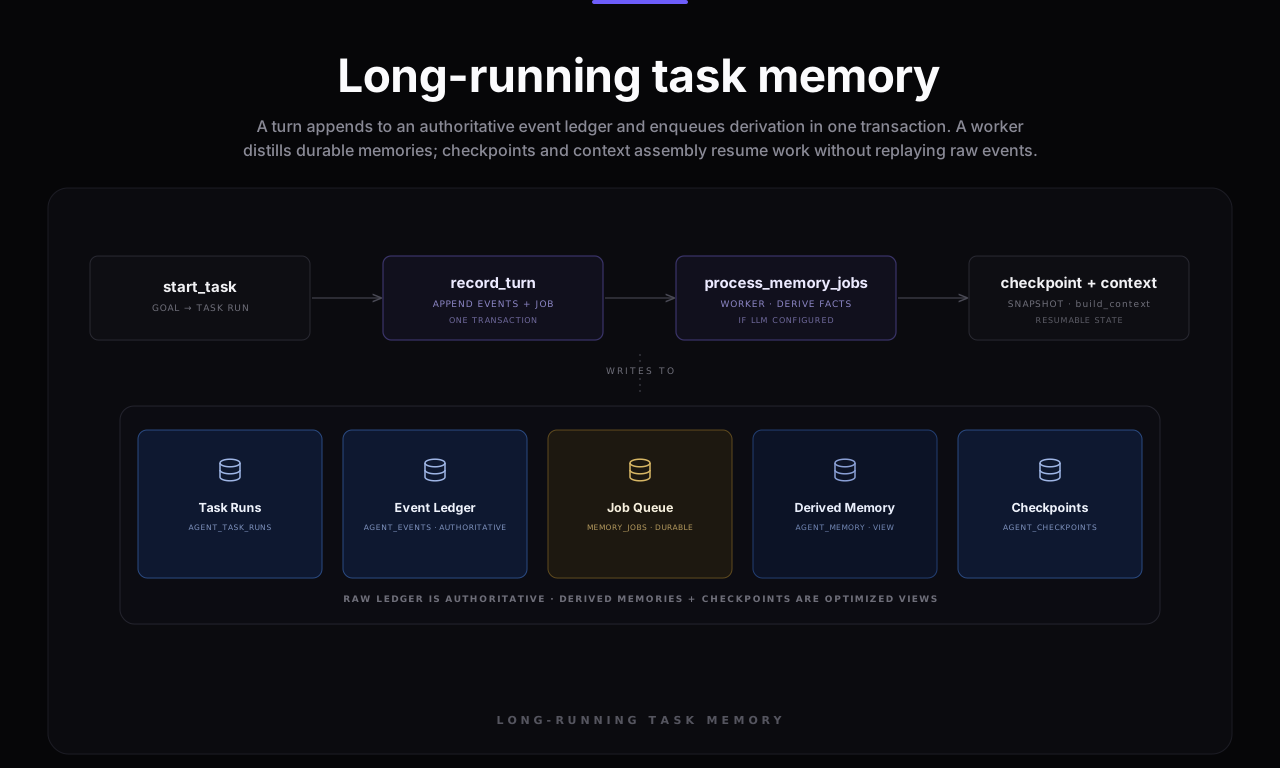
src/engram/task/manager.py persists task runs, ledger events, redactions, checkpoints, and durable memory jobs.

ContextBuilder

src/engram/task/context.py builds bounded task context from task state, recent events, checkpoints, typed memory search, and optional graph traversal.

GraphTraversal

src/engram/graph/traversal.py creates and traverses typed memory relations. traverse_many() supports prompt assembly from several retrieved memories.

Provider Services

EmbeddingService and LLMService create configured providers from EngramSettings. Embeddings are required. LLMs are optional and enable fact extraction, query expansion, and evidence answering.

Database Tables

Table Purpose
agents agent namespace
users optional user namespace
agent_memory fact memory with embeddings, type, metadata, and source context
memory_relations directed graph edges between memories
agent_sessions conversation sessions and rolling summaries
agent_task_runs long-running task runs
agent_events raw user/assistant/tool/agent/system event ledger with optional embeddings for hybrid event recall
agent_checkpoints compact task summaries
memory_jobs durable queue for derivation work

Connect Flow

---
config:
  theme: base
  look: handDrawn
  themeVariables:
    primaryColor: '#e1f5fe'
    secondaryColor: '#fffde7'
---
flowchart TD
    %% Input
    Start{{"<b>Engram.connect()</b>"}}

    subgraph PREP ["馃數 1 路 Preparation"]
        direction TB
        Emb([<b>EmbeddingService</b><br/>from_settings]) --> 
        Detect(Detect embedding dimension)
    end

    subgraph INIT ["馃煛 2 路 Initialization"]
        direction TB
        DBConn([<b>PostgresStorage</b><br/>connect]) --> 
        Schema(<b>init_schema</b><br/>run migrations, align dimension) -->
        Svcs(<b>Initialize Services</b><br/>MemoryStore, Tasks, etc.)
    end

    %% Flow
    Start ==> PREP
    PREP ==> INIT

    %% Styling
    style PREP fill:#e1f5fe,stroke:#01579b,stroke-width:2px,rx:10,ry:10
    style INIT fill:#fffde7,stroke:#fbc02d,stroke-width:2px,rx:10,ry:10

    classDef process fill:#fff,stroke:#333,stroke-width:1px,rx:8,ry:8;
    classDef api fill:#fff,stroke:#333,stroke-width:2px,rx:20,ry:20;
    classDef source fill:#fff,stroke:#01579b,stroke-width:2px;

    class Detect,Schema,Svcs process;
    class Emb,DBConn api;
    class Start source;

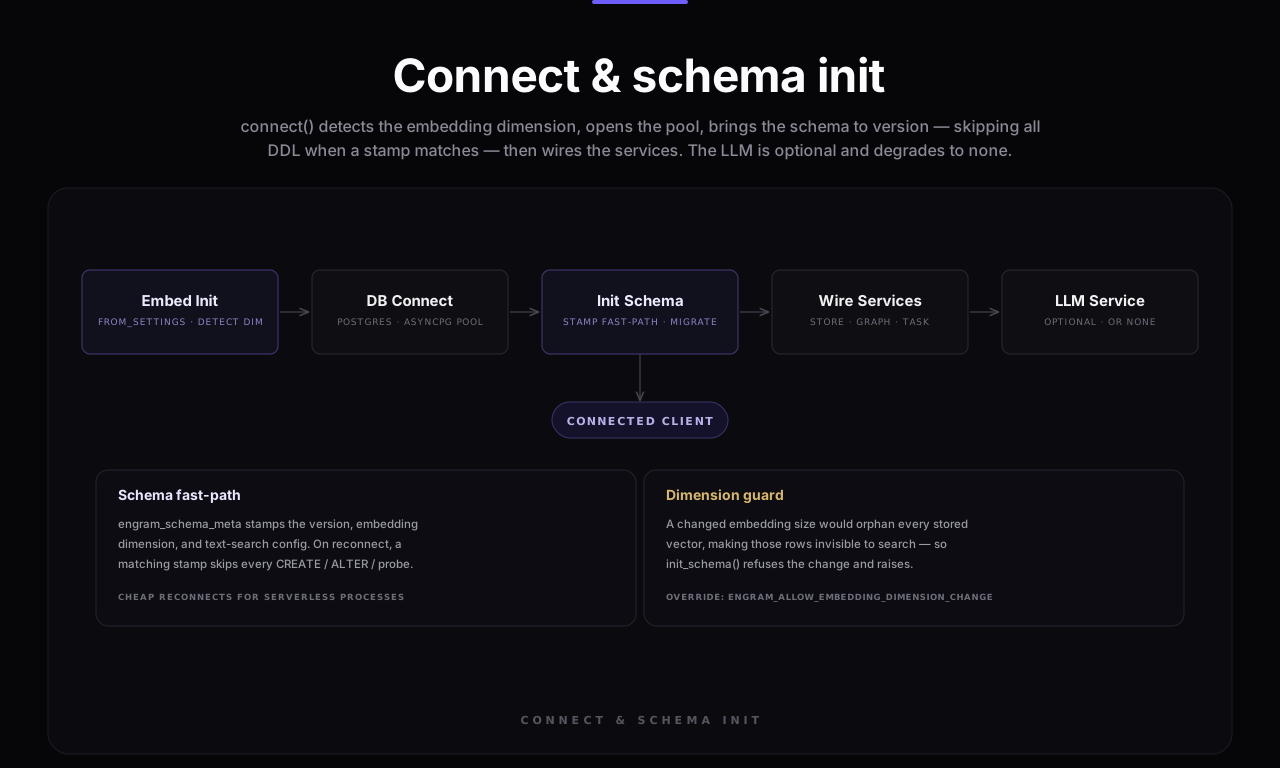
If a vector dimension change would clear existing embeddings, init_schema() raises unless ENGRAM_ALLOW_EMBEDDING_DIMENSION_CHANGE=true.

Memory Write Flow

---
config:
  theme: base
  look: handDrawn
  themeVariables:
    primaryColor: '#e1f5fe'
    secondaryColor: '#e8f5e9'
---
flowchart TD
    %% Input
    Input{{"<b>engram.add()</b><br/>fact, context, metadata"}}

    subgraph POLICY ["馃數 1 路 Policy Check"]
        direction TB
        Pol([<b>MemoryPolicy</b><br/>apply_metadata]) -->
        Infer(Infer type & assign conflict_key)
    end

    subgraph STORAGE ["馃煝 2 路 Storage & Dedup"]
        direction TB
        Add([<b>MemoryStore</b><br/>add]) -->
        Lock(Acquire duplicate-scope lock) -->
        Dedup(Check near duplicates) -->
        Insert[(Insert to agent_memory)] -->
        Supersede(Supersede older conflict rows)
    end

    Out((<b>Memory</b>))

    %% Flow
    Input ==> POLICY
    POLICY ==> STORAGE
    STORAGE ==> Out

    %% Styling
    style POLICY fill:#e1f5fe,stroke:#01579b,stroke-width:2px,rx:10,ry:10
    style STORAGE fill:#e8f5e9,stroke:#2e7d32,stroke-width:2px,rx:10,ry:10

    classDef process fill:#fff,stroke:#333,stroke-width:1px,rx:8,ry:8;
    classDef api fill:#fff,stroke:#333,stroke-width:2px,rx:20,ry:20;
    classDef source fill:#fff,stroke:#01579b,stroke-width:2px;
    classDef dbnode fill:#fff,stroke:#2e7d32,stroke-width:2px;

    class Infer,Lock,Dedup,Supersede process;
    class Pol,Add api;
    class Input source;
    class Insert dbnode;

Recall Flow

---
config:
  theme: base
  look: handDrawn
  themeVariables:
    primaryColor: '#e1f5fe'
    secondaryColor: '#f3e5f5'
---
flowchart TD
    %% Input
    Input{{"<b>trace_recall(query)</b>"}}

    subgraph RETRIEVAL ["馃數 1 路 Retrieval Pipelines"]
        direction TB
        Crit(["<b>recall_critical()</b><br/>metadata lookup"])
        Srch(["<b>deep_search() / search()</b><br/>vector + keyword + decay"])
        Hist(List superseded history)
    end

    subgraph RANKING ["馃煟 2 路 Fusion & Ranking"]
        direction TB
        Dedupe(Dedupe critical + search hits) -->
        Trim(Trim to prompt budget)
    end

    Out((<b>RecallTrace</b>))

    %% Flow
    Input ==> Crit & Srch & Hist
    Crit & Srch ==> Dedupe
    Hist ==> Trim
    Trim ==> Out

    %% Styling
    style RETRIEVAL fill:#e1f5fe,stroke:#01579b,stroke-width:2px,rx:10,ry:10
    style RANKING fill:#f3e5f5,stroke:#7b1fa2,stroke-width:2px,rx:10,ry:10

    classDef process fill:#fff,stroke:#333,stroke-width:1px,rx:8,ry:8;
    classDef api fill:#fff,stroke:#333,stroke-width:2px,rx:20,ry:20;
    classDef source fill:#fff,stroke:#01579b,stroke-width:2px;

    class Dedupe,Trim,Hist process;
    class Crit,Srch api;
    class Input source;

Evidence Flow

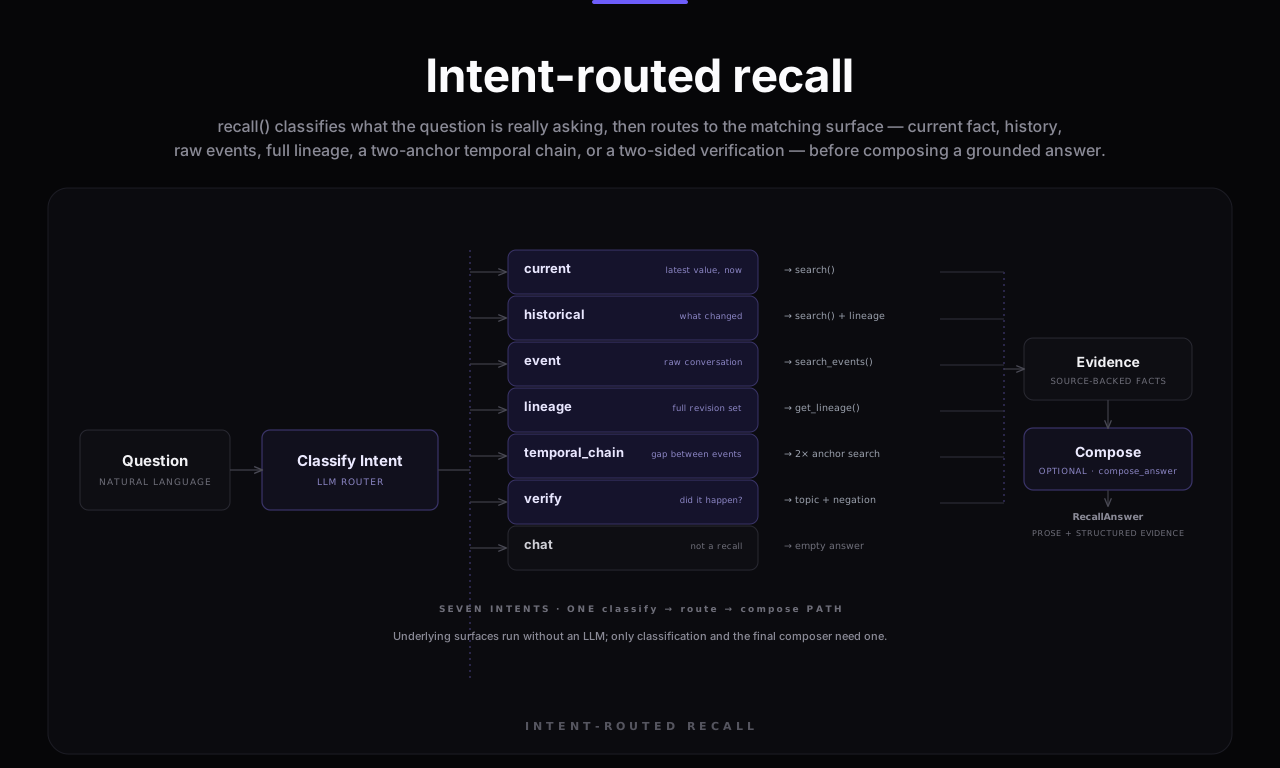
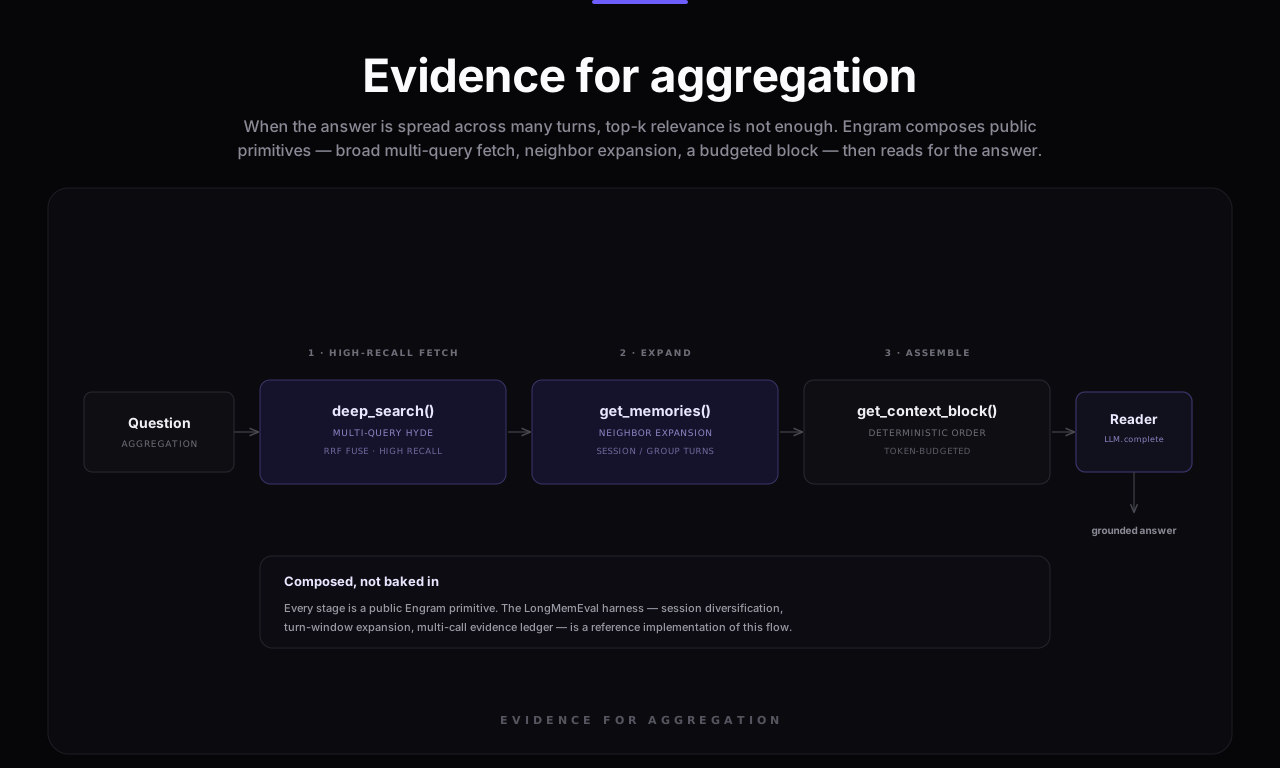
Aggregation questions, where the answer may be spread across several turns or sessions, are composed from public primitives:
---
config:
  theme: base
  look: handDrawn
  themeVariables:
    primaryColor: '#e1f5fe'
    secondaryColor: '#fffde7'
    tertiaryColor: '#f3e5f5'
---
flowchart TD
    %% Stages
    subgraph SEARCH ["馃數 1 路 Search"]
        direction TB
        Deep(["<b>deep_search()</b><br/>multi-query retrieval"])
    end

    subgraph EXPAND ["馃煛 2 路 Expand Context"]
        direction TB
        Mem(["<b>get_memories()</b><br/>neighboring session turns"]) -->
        Ctx(["<b>get_context_block()</b><br/>budgeted prompt block"])
    end

    subgraph READ ["馃煟 3 路 Machine Reading"]
        direction TB
        LLM(["<b>LLM.complete()</b><br/>answer from evidence"])
    end

    %% Flow
    SEARCH ==> EXPAND
    EXPAND ==> READ

    %% Styling
    style SEARCH fill:#e1f5fe,stroke:#01579b,stroke-width:2px,rx:10,ry:10
    style EXPAND fill:#fffde7,stroke:#fbc02d,stroke-width:2px,rx:10,ry:10
    style READ fill:#f3e5f5,stroke:#7b1fa2,stroke-width:2px,rx:10,ry:10

    classDef api fill:#fff,stroke:#333,stroke-width:2px,rx:20,ry:20;
    class Deep,Mem,Ctx,LLM api;

The session-diversified selection, turn-window expansion, and multi-call evidence-ledger reader used by the LongMemEval benchmark are a reference implementation of this flow in scripts/longmemeval_harness.py, built on these same public APIs rather than baked into the library.

Task Flow

---
config:
  theme: base
  look: handDrawn
  themeVariables:
    primaryColor: '#e1f5fe'
    secondaryColor: '#fffde7'
    tertiaryColor: '#e8f5e9'
---
flowchart TD
    Start{{"<b>start_task(goal)</b>"}}

    subgraph LEDGER ["馃數 1 路 Event Ledger"]
        direction TB
        Turn(["<b>record_turn()</b><br/>user, assistant, tools"]) -->
        App(agent_events append) -->
        Enq(Enqueue turn_ingest)
    end

    subgraph DERIVE ["馃煛 2 路 Background Derivation"]
        direction TB
        Work(["<b>process_memory_jobs()</b>"]) -->
        Fact(Fact extraction via LLM)
    end

    subgraph STATE ["馃煝 3 路 Context Assembly"]
        direction TB
        Ckpt(["<b>create_checkpoint()</b>"]) -->
        Ctx(["<b>build_context()</b>"])
    end

    %% Flow
    Start ==> LEDGER
    LEDGER ==> DERIVE
    DERIVE ==> STATE

    %% Styling
    style LEDGER fill:#e1f5fe,stroke:#01579b,stroke-width:2px,rx:10,ry:10
    style DERIVE fill:#fffde7,stroke:#fbc02d,stroke-width:2px,rx:10,ry:10
    style STATE fill:#e8f5e9,stroke:#2e7d32,stroke-width:2px,rx:10,ry:10

    classDef process fill:#fff,stroke:#333,stroke-width:1px,rx:8,ry:8;
    classDef api fill:#fff,stroke:#333,stroke-width:2px,rx:20,ry:20;
    classDef source fill:#fff,stroke:#01579b,stroke-width:2px;

    class App,Enq,Fact process;
    class Turn,Work,Ckpt,Ctx api;
    class Start source;

The raw ledger is authoritative. Derived memories and checkpoints are optimized views used for recall and prompt assembly.

Long-Input Flow

---
config:
  theme: base
  look: handDrawn
  themeVariables:
    primaryColor: '#e1f5fe'
    secondaryColor: '#fffde7'
---
flowchart TD
    Input{{"<b>record_long_input()</b><br/>text payload"}}

    subgraph CHUNKING ["馃數 1 路 Chunking"]
        direction TB
        Src(Raw source event) -->
        Split(Chunk by headings) -->
        Art[(Artifact event<br/>char span + quote_hash)]
    end

    subgraph EXTRACTION ["馃煛 2 路 Fact Extraction"]
        direction TB
        LLM([<b>LLM Extractor</b>]) -->
        Mem[(Anchored memories<br/>with source metadata)] -->
        Man(Manifest checkpoint)
    end

    %% Flow
    Input ==> CHUNKING
    CHUNKING ==> EXTRACTION

    %% Styling
    style CHUNKING fill:#e1f5fe,stroke:#01579b,stroke-width:2px,rx:10,ry:10
    style EXTRACTION fill:#fffde7,stroke:#fbc02d,stroke-width:2px,rx:10,ry:10

    classDef process fill:#fff,stroke:#333,stroke-width:1px,rx:8,ry:8;
    classDef api fill:#fff,stroke:#333,stroke-width:2px,rx:20,ry:20;
    classDef dbnode fill:#fff,stroke:#333,stroke-width:1px,rx:2,ry:2;
    classDef source fill:#fff,stroke:#01579b,stroke-width:2px;

    class Src,Split,Man process;
    class LLM api;
    class Art,Mem dbnode;
    class Input source;

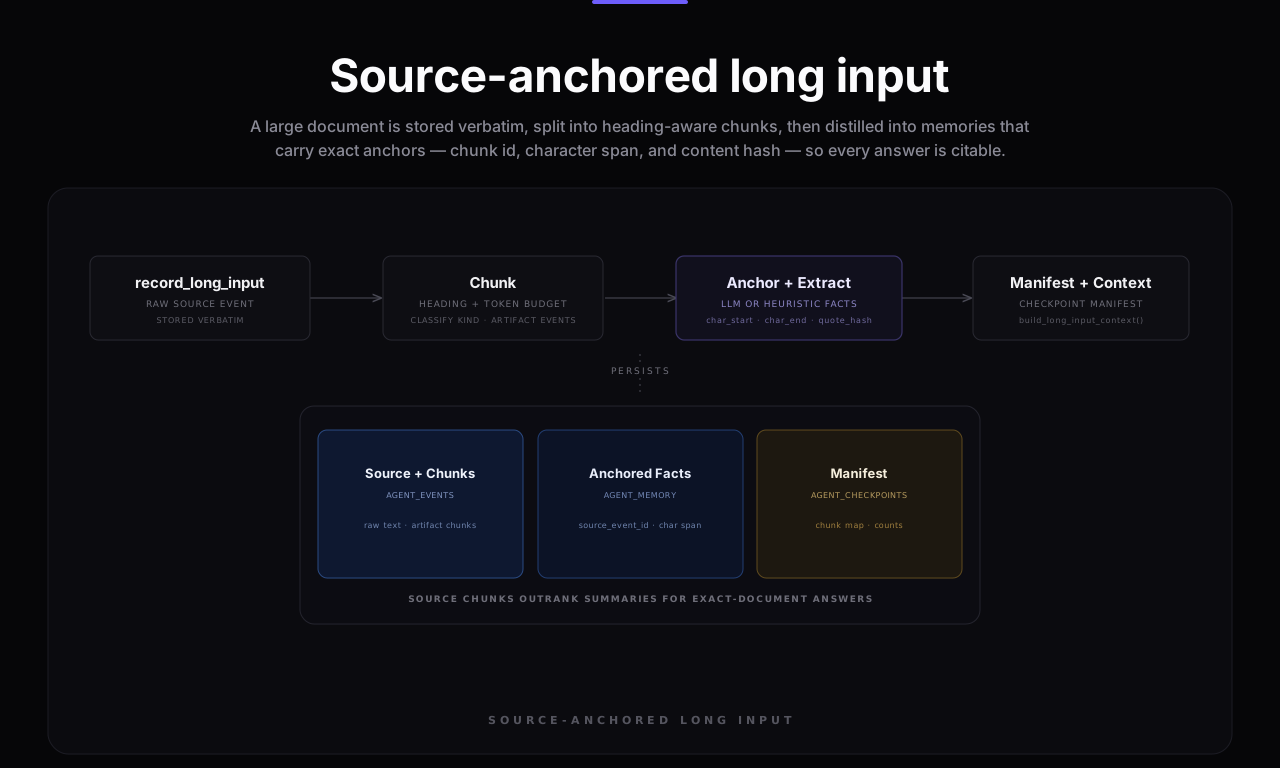
build_long_input_context() combines recall trace, selected source chunks, and the long-input manifest.

Search Implementation

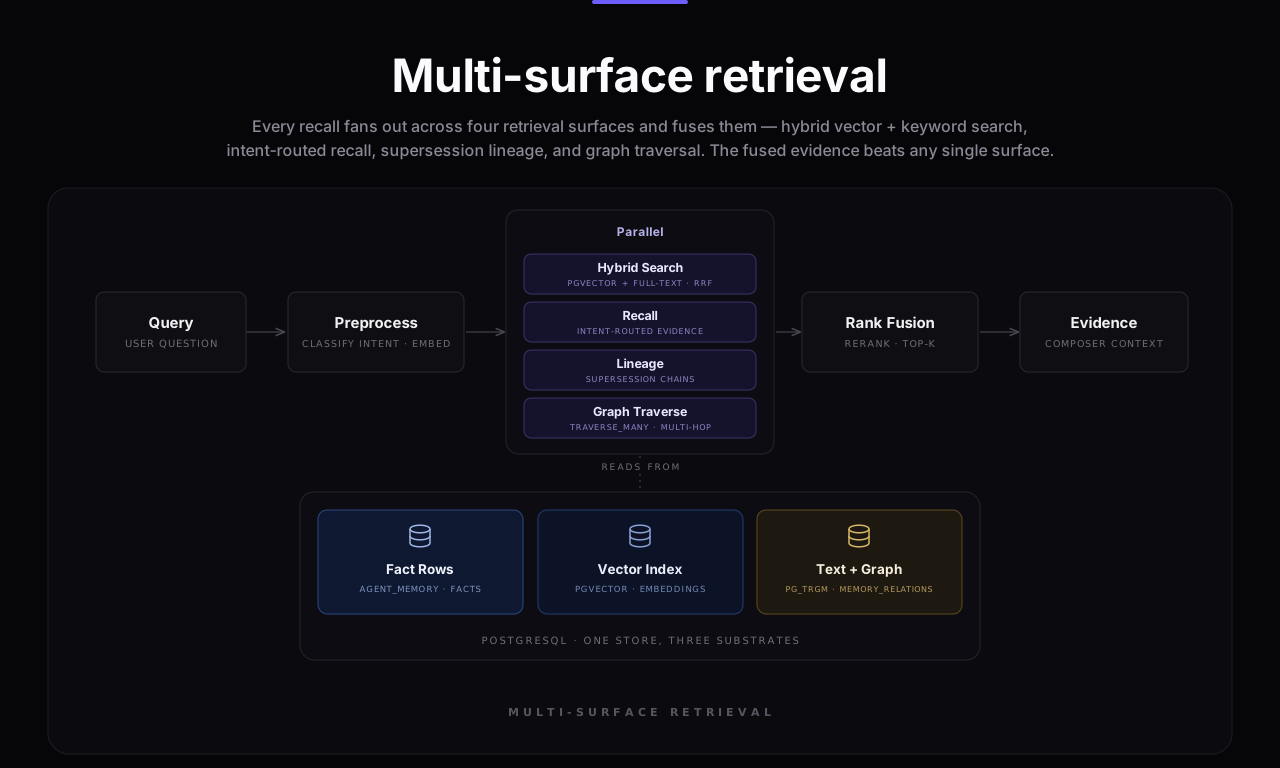
Hybrid search uses:

  • pgvector cosine similarity over agent_memory.embedding
  • PostgreSQL full-text search over generated fact_tsv
  • recency/access decay
  • memory importance
  • optional JSONB metadata_filter
  • optional memory_types
  • optional local cross-encoder reranking

Superseded memories are excluded from normal search with metadata status checks.

Provider Architecture

Embedding providers:

  • OpenAI
  • Sentence Transformers
  • Cohere
  • Ollama
  • HuggingFace Inference

LLM providers:

  • OpenAI
  • Anthropic
  • Ollama
  • Groq
  • LiteLLM

Providers register through the provider registry and are created from EngramSettings.

Reliability Boundaries

Engram provides durable storage, retrieval traces, conflict metadata, and resumable task state. Applications remain responsible for:

  • tenant authorization
  • PII detection
  • legal citation verification
  • provider retry policy
  • job monitoring and alerting
  • user-facing privacy workflows
  • human review in high-stakes domains